
Baccarat main and side wagers: reconcile a win and a loss separately
Published — UTC
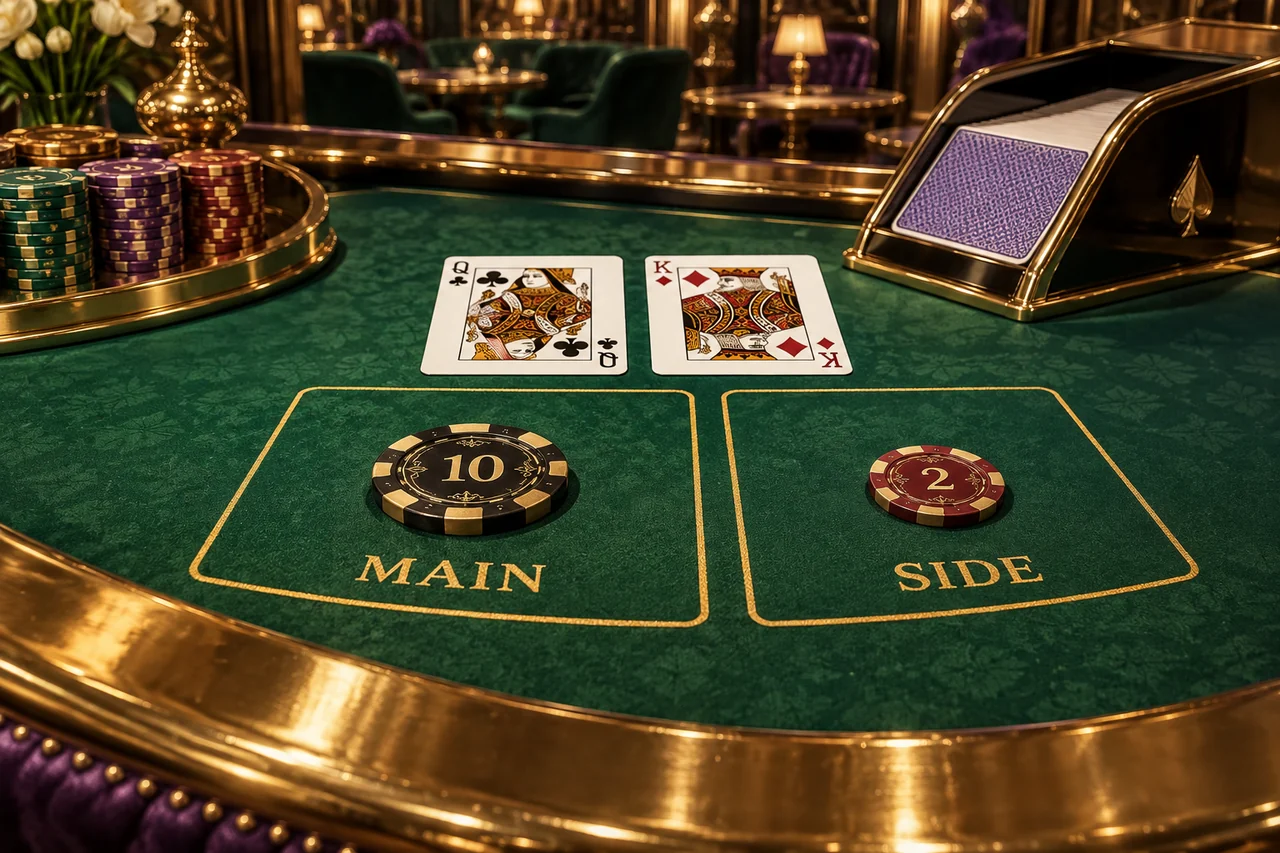
The main baccarat result does not settle every side wager. Conversely, a side-wager win does not make the main hand a winner. A whole-round total needs every accepted stake and each separately settled return.
An explicit fictional paytable
Assume a 10-unit main wager loses. A separate 2-unit side wager satisfies its stated condition and pays 11:1 in profit odds. This is an invented side rule, not a claim about Pair, Perfect Pair or a named table.
| Component | Stake | Profit on a win | Amount returned |
|---|---|---|---|
| Main wager, loses | 10 | 0 | 0 |
| Side wager, wins | 2 | 22 | 24 |
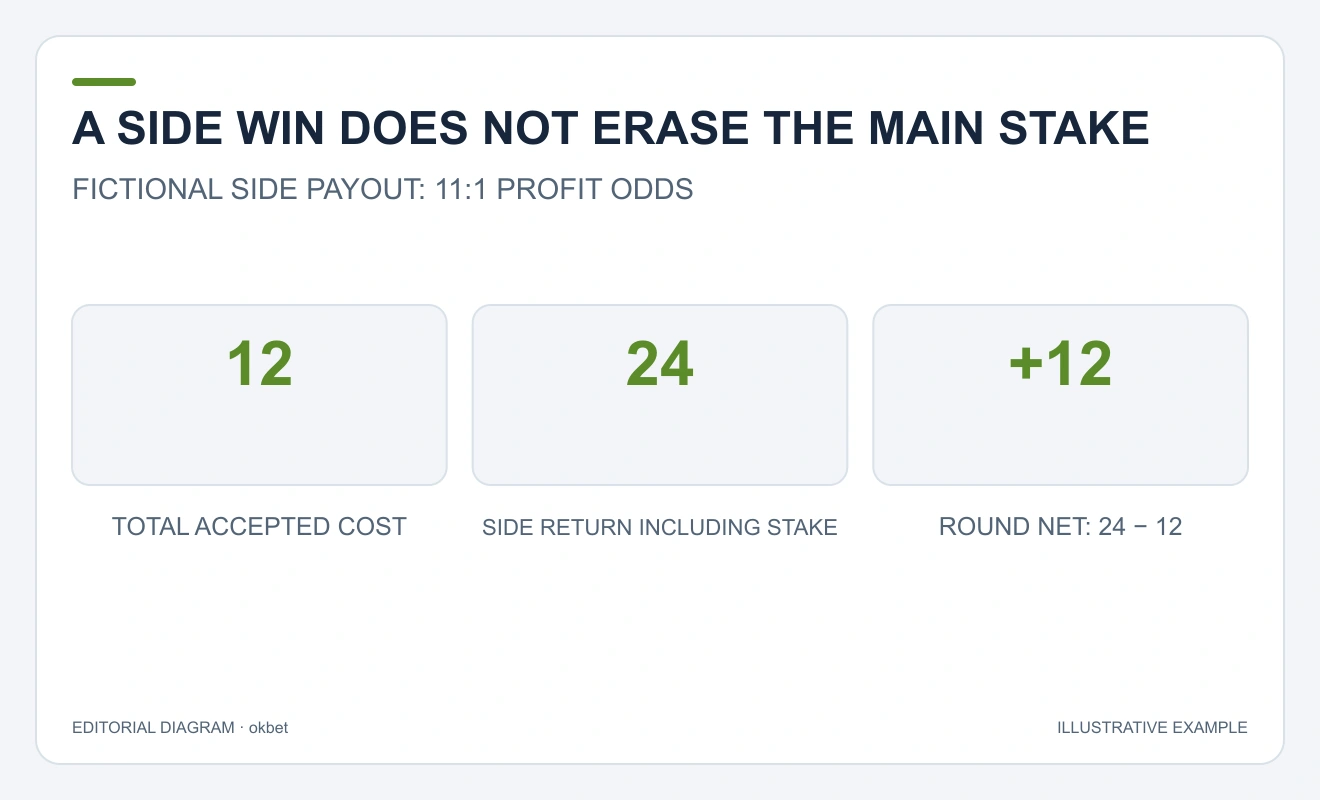
The side return is 2 + 2 × 11 = 24. The round’s accepted cost is 12. Its net is therefore 24 − 12 = 12 units. Reporting 22 as the whole-round profit would omit the lost main stake; reporting 24 as profit would also include the returned side stake.
Reverse the results without reversing the rules
If the main wager instead returns 20 and the side wager loses, the same 12-unit total cost produces an 8-unit net. There is no need to invent a single combined win label: two wager rows explain the result.
These figures assume no commission, deduction, cap or promotional adjustment. Any actual charge needs its own row or a clear statement that it is already included in the displayed return.
Identify what the ratio describes
The British game-rules reference addresses winning conditions and prize descriptions. It does not establish a local table’s payout or verify availability.
“11 for 1” would change this worksheet
If a different fictional table defines its label as 11 units returned for every unit staked, the 2-unit side stake returns 22 in total. The combined net becomes 22 − 12 = 10, not 12. Compare that with the stated 11:1 profit convention, which produces 22 profit plus the 2-unit side stake back. Read the definition rather than interpreting a ratio from typography alone.
Check the result against the whole balance
With 100 units initially, accepting both stakes leaves 88. Under the original profit-odds example, the 24-unit credit leaves 112. If a separately confirmed 1-unit charge applies, the closing balance is 111 and net is 11. Do not subtract that charge again if the recorded return already excludes it.
A cancellation is another separate state
If the side wager is canceled and its 2-unit stake is returned while the 10-unit main wager loses, the round returns 2 against 12 debited: net −10. The refunded side stake is not a side-wager profit. If the side entry was never accepted or debited, there is no side charge to refund; the ledger needs only the accepted main cost.
Retain wager type, accepted stake, amount convention, result and adjustment ID per row. These fields let another reader rebuild the total without treating “round won” or “round lost” as a substitute for the underlying entries.